UnderSelf editorial desk · September 17, 2026 · 2 min read · Source: psypost.org
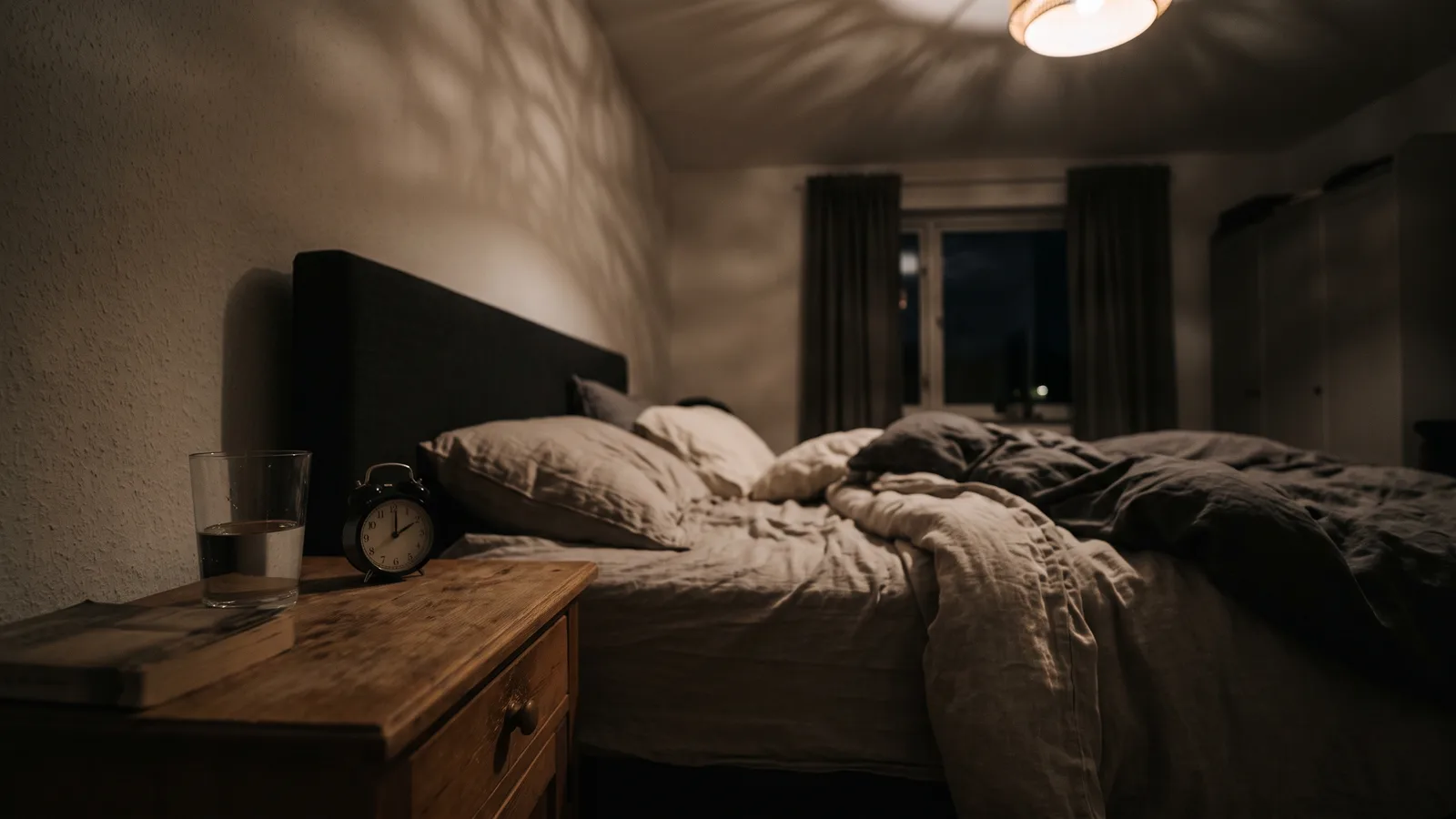
A team publishing in the Journal of Sleep Research, reported by PsyPost on September 10, 2026, tracked 60 university students, split evenly into a group that rated itself easily rattled by stress at night and a group that did not, across 800 nights of matched sleep-tracker and survey data. The question was simple: when a stressful day turns into a bad night, is it the body staying wound up, or the mind that will not stop talking? The physical measures hardly registered. What predicted a disrupted night, for almost everyone in the study, was what the researchers called cognitive arousal, a mind still running through the day once the lights are off.
The more interesting finding sits inside the two groups the researchers sorted by self-reported sleep reactivity before the study began. The 30 students in the high-reactivity group were not necessarily having harder days than the other 30. They were registering the same kind of day more intensely once nothing else competed for their attention, and staying awake longer working through it. That reframes a familiar complaint: a stressful day making sleep hard may say less about the day itself and more about what a particular mind does with it once the room goes quiet. Worth knowing: the sample was mostly young, female, Chinese university students in Singapore, and the racing-thoughts measure was reported the next morning rather than logged in real time, so a rough night could be shading the memory of how it started.
Think about the last night your mind kept talking after you turned off the light. Was it the day itself keeping you awake, or your own replay of it, running a lap nobody asked for?
Status: DRAFT, awaiting the coordinator's tool lint and the creative director's judge pass.
Curious what one of yours actually means?
Try a free reading →